How Podiatrists Diagnose and Treat Foot Fractures
- posted: Oct. 15, 2025
A broken bone in the foot can happen in a second—sometimes from a sports injury, a heavy object landing on the toes, or even just a misstep on uneven ground. Because the foot is made up of 26 bones, fractures are more common than many people realize, and the pain can make everyday tasks like walking or driving difficult.
At Prairie Foot and Ankle, P.C., serving Elgin and Park Ridge, IL, Dr. Supreet Ghuman helps patients get the right diagnosis and treatment so their feet can heal properly and they can get back to daily life.
Diagnosing a Foot Fracture
The first step is always a thorough evaluation. Because foot pain can come from many causes—not just fractures—an accurate diagnosis matters.
- Medical History and Symptoms
Dr. Ghuman will ask about how the injury occurred, your activity level, and the type of pain or swelling you’re experiencing. - Physical Examination
The podiatrist checks for tenderness, bruising, and changes in foot shape or movement. - Imaging Tests
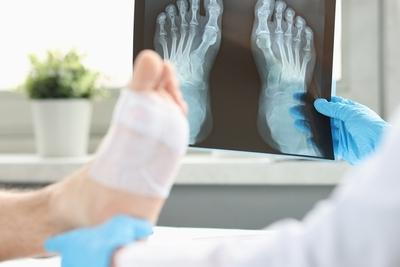
X-rays are commonly used to confirm fractures and show how severe they are. In some cases, advanced imaging like MRI or CT scans may be recommended.
Treatment Options
Treatment depends on the location and severity of the break. Common approaches include:
- Immobilization
A cast, boot, or splint keeps the bone stable while it heals. - Activity Modification
Patients may need to avoid weight-bearing activities until the fracture has repaired. - Medication
Over-the-counter or prescribed medication may be used to manage pain and swelling. - Surgical Repair
For more complex fractures, surgery may be necessary to align and stabilize the bones with pins, screws, or plates.
No matter the treatment, follow-up visits are important to track healing progress and adjust care as needed.
Preventing Complications
Proper treatment helps prevent long-term problems such as chronic pain, arthritis, or improper healing. That’s why seeing a podiatrist promptly after an injury is so important—delaying care can make recovery more difficult.
When to See a Podiatrist
If you’ve injured your foot and notice swelling, bruising, or difficulty bearing weight, it’s best to have it evaluated as soon as possible. Even what feels like a “minor” injury may be a fracture that needs care.
Contact Prairie Foot and Ankle, P.C.
If you suspect a foot fracture, don’t wait to get help. Dr. Supreet Ghuman at Prairie Foot and Ankle, P.C. offers expert diagnosis and treatment at both our Elgin and Park Ridge, IL locations.
Call us today at (224) 227-6973 to schedule your appointment.
- posted: Oct. 15, 2025
A broken bone in the foot can happen in a second—sometimes from a sports injury, a heavy object landing on the toes, or even just a misstep on uneven ground. Because the foot is made up of 26 bones, fractures are more common than many people realize, and the pain can make everyday tasks like walking or driving difficult.
At Prairie Foot and Ankle, P.C., serving Elgin and Park Ridge, IL, Dr. Supreet Ghuman helps patients get the right diagnosis and treatment so their feet can heal properly and they can get back to daily life.
Diagnosing a Foot Fracture
The first step is always a thorough evaluation. Because foot pain can come from many causes—not just fractures—an accurate diagnosis matters.
- Medical History and Symptoms
Dr. Ghuman will ask about how the injury occurred, your activity level, and the type of pain or swelling you’re experiencing. - Physical Examination
The podiatrist checks for tenderness, bruising, and changes in foot shape or movement. - Imaging Tests
X-rays are commonly used to confirm fractures and show how severe they are. In some cases, advanced imaging like MRI or CT scans may be recommended.
Treatment Options
Treatment depends on the location and severity of the break. Common approaches include:
- Immobilization
A cast, boot, or splint keeps the bone stable while it heals. - Activity Modification
Patients may need to avoid weight-bearing activities until the fracture has repaired. - Medication
Over-the-counter or prescribed medication may be used to manage pain and swelling. - Surgical Repair
For more complex fractures, surgery may be necessary to align and stabilize the bones with pins, screws, or plates.
No matter the treatment, follow-up visits are important to track healing progress and adjust care as needed.
Preventing Complications
Proper treatment helps prevent long-term problems such as chronic pain, arthritis, or improper healing. That’s why seeing a podiatrist promptly after an injury is so important—delaying care can make recovery more difficult.
When to See a Podiatrist
If you’ve injured your foot and notice swelling, bruising, or difficulty bearing weight, it’s best to have it evaluated as soon as possible. Even what feels like a “minor” injury may be a fracture that needs care.
Contact Prairie Foot and Ankle, P.C.
If you suspect a foot fracture, don’t wait to get help. Dr. Supreet Ghuman at Prairie Foot and Ankle, P.C. offers expert diagnosis and treatment at both our Elgin and Park Ridge, IL locations.
Call us today at (224) 227-6973 to schedule your appointment.
Our Location
Find us on the map
